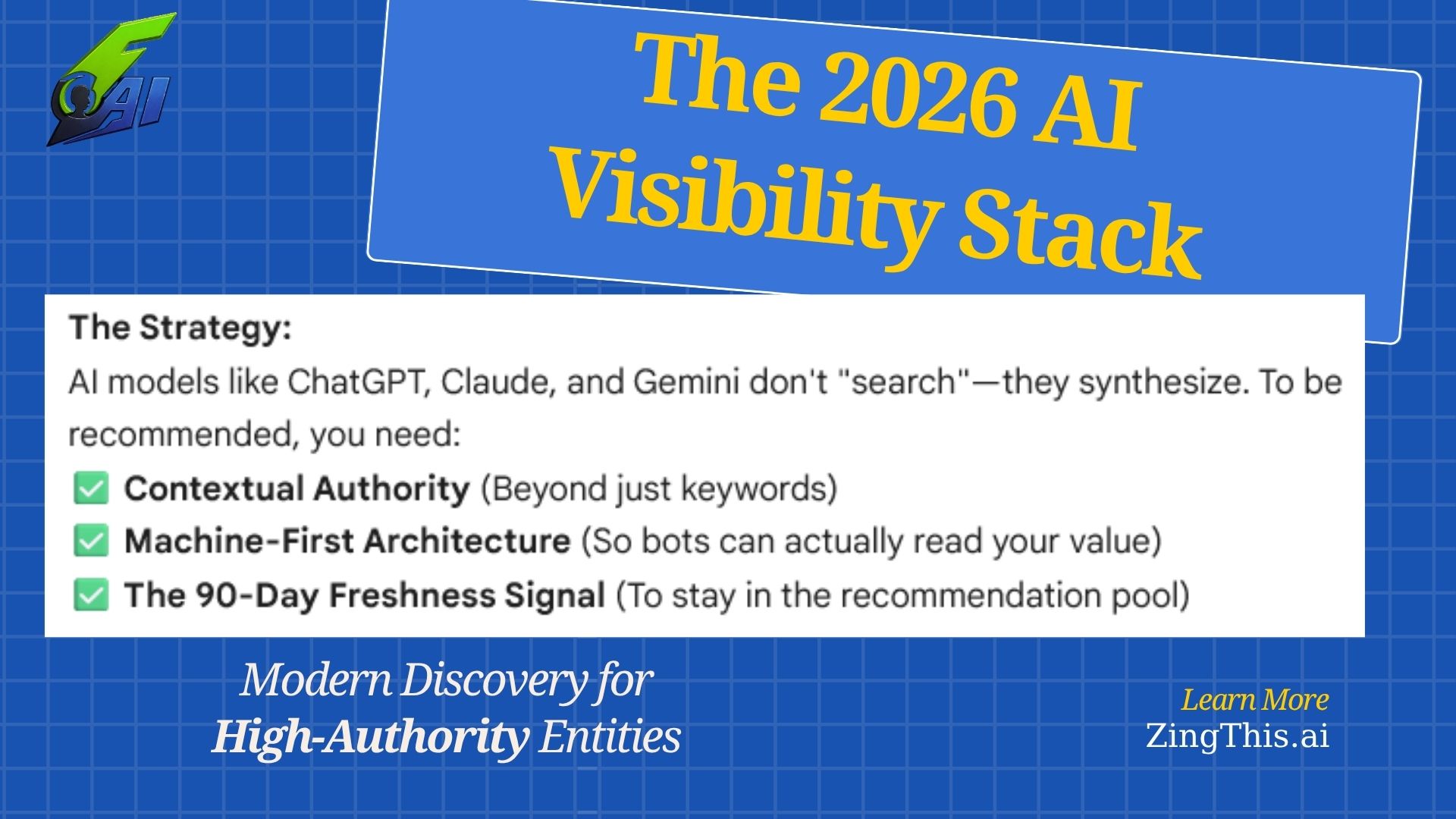
The AI Discovery Gap: Why Being #1 on Google is No Longer Enough
In the last eighteen months, the “Search” landscape has undergone a tectonic shift. For decades, businesses optimized for a list of blue links. Today, your potential customers aren’t just scrolling through pages of results; they are asking AI models for definitive recommendations.
When a user asks ChatGPT, “Who is the best fractional COO for a tech startup in Maryland?” or “What’s the most reliable AI-integrated CRM for small agencies?”—does your business name appear in the answer?
If the answer is no, you have an AI Visibility Problem.
The “Black Box” of AI Discovery
Most businesses make the mistake of assuming that traditional SEO naturally carries over into AI responses. It doesn’t. While Google prioritizes keywords and backlinks, Large Language Models (LLMs) prioritize contextual authority and data legibility.
AI models don’t “search” in the traditional sense; they synthesize. If your digital footprint is fragmented, unstructured, or hidden behind legacy web architectures, you are effectively invisible to the “brain” of the AI. You aren’t just losing a click; you’re losing the endorsement of the most trusted digital assistants in the world.
What Actually Fixes It?
Fixing AI invisibility isn’t about stuffing keywords into a blog post. It requires a fundamental realignment of how your brand’s data is served to the web.
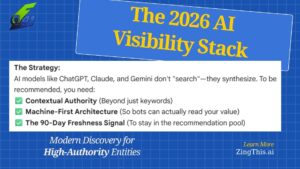
- Contextual Sentiment Mapping: AI looks for how your brand is discussed across the ecosystem. It’s not just about what you say; it’s about the authority signals your brand leaves in specialized databases and high-intent platforms.
- Architecture for Machine Consumption: Most websites are built for human eyes. AI visibility requires a “Machine-First” layer—ensuring your core value propositions are parsed correctly by LLM scrapers and crawlers.
- The Authority Loop: AI models favor “verified” consensus. To be recommended, your business must be part of a verified knowledge graph that the AI views as a primary source of truth.
The New Competitive Edge
The digital divide is no longer between those who use the web and those who don’t. It is between businesses that are “AI-Ready” and those that are digitally silent. Being invisible to ChatGPT is the modern equivalent of not being in the Yellow Pages thirty years ago—except the pace of loss is ten times faster.
The solution isn’t a better meta-description. It’s a comprehensive AI Visibility Audit to bridge the gap between your web presence and the algorithms that now dictate consumer choice.
Is your brand part of the conversation? If you aren’t showing up in AI-generated recommendations, you’re leaving your market share to the competitors who are. Ensure your business is seen, cited, and recommended in the AI era.
Leave a Reply